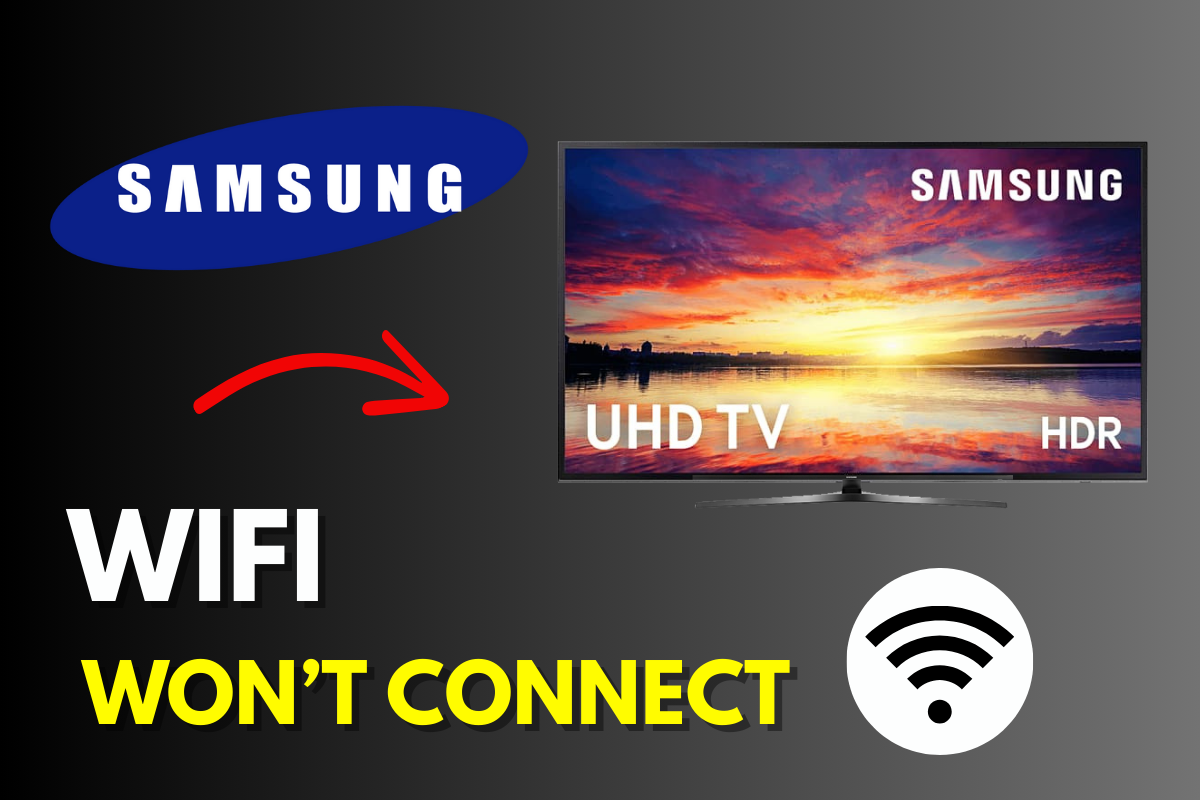
There’s nothing more frustrating than settling in for a movie night or preparing to stream your favorite IPTV player content, only to discover your Samsung TV refuses to connect to WiFi. This common issue affects thousands of Samsung TV owners daily, disrupting everything from Netflix binges to live sports streaming. Whether you’re dealing with a brand-new Smart TV or an older model, WiFi connectivity problems can stem from simple software glitches to more complex network configuration issues. The good news? Most connection failures can be resolved without calling a technician or replacing expensive hardware.
- Samsung TV WiFi issues typically result from outdated firmware, incorrect network settings, or router compatibility problems rather than hardware failure
- Simple solutions like power cycling your TV and router resolve approximately 60% of connection issues within minutes
- Advanced fixes including DNS server changes, MAC address configuration, and Smart Hub resets address persistent connectivity problems
- Understanding your network environment—including bandwidth requirements for IPTV services and streaming—helps prevent future disconnections
- When basic troubleshooting fails, factory resets and router firmware updates provide comprehensive solutions for stubborn connection failures
Why Your Samsung TV Won’t Connect to WiFi: Understanding the Root Causes
Before diving into solutions, understanding why Samsung TVs experience WiFi connectivity issues helps you apply the most effective fix. Network interference, outdated software, and conflicting IP addresses rank among the most common culprits. Samsung Smart TVs rely on stable wireless connections to access streaming platforms, software updates, and smart home integrations.
Your Samsung TV might display error messages like “Unable to connect to network,” “No wireless networks found,” or simply show available networks without successfully connecting. Each symptom points to different underlying issues. According to Samsung’s official support documentation, environmental factors including router distance, physical obstructions, and competing wireless devices significantly impact connection stability.
Modern Samsung TVs support both 2.4GHz and 5GHz frequency bands, but compatibility mismatches between your TV model and router settings often create connectivity barriers. Additionally, if you’re planning to use IPTV services on your Samsung TV, stable WiFi becomes even more critical for buffer-free streaming.
Fix #1: Power Cycle Your Samsung TV and Router (The Universal Reset)
This fundamental troubleshooting step resolves more WiFi issues than any other single fix. Power cycling clears temporary memory caches and resets network adapters that may have frozen or encountered errors during operation. Unlike simply turning off your TV with the remote, a true power cycle completely drains residual electrical charge.
Step-by-step process:
- Turn off your Samsung TV using the remote control
- Unplug the TV’s power cord from the wall outlet (not just the TV)
- Simultaneously unplug your WiFi router and modem
- Wait exactly 60 seconds—this timing matters for proper discharge
- Plug in your modem first, wait 30 seconds until all lights stabilize
- Plug in your router next, allowing another 30 seconds for boot-up
- Finally, reconnect your Samsung TV power cord
- Turn on the TV and attempt to reconnect to WiFi
This simple sequence allows both devices to establish a fresh connection handshake, often eliminating mysterious connection failures that resist other fixes.
Fix #2: Verify Your WiFi Network Password and Settings
Surprisingly common yet often overlooked, incorrect password entry accounts for approximately 25% of connection failures. Samsung TV remotes make typing passwords challenging, and case-sensitive characters or special symbols are easily mistyped using the on-screen keyboard.
Navigate to Settings > General > Network > Network Status > IP Settings on your Samsung TV. Verify the network name (SSID) matches your intended WiFi network exactly. Hidden networks, duplicate SSIDs from neighbors, or guest network configurations can create confusion. If you’ve recently changed your router password or network name, your TV still remembers the old credentials, causing authentication failures.
Pro tip: Enable “Show Password” on your Samsung TV when entering credentials to visually confirm each character. Consider temporarily simplifying your WiFi password to alphanumeric characters only until establishing a stable connection, then change it back through your router’s admin panel.
Fix #3: Update Your Samsung TV Software to the Latest Version
Firmware updates frequently include networking stack improvements, security patches, and bug fixes specifically targeting WiFi connectivity. Outdated software versions may contain known compatibility issues with modern routers or security protocols that Samsung has since resolved.
If your TV connects to WiFi intermittently, update during a stable connection window. For completely offline TVs, Samsung provides USB update methods:
- Visit Samsung’s support downloads page using a computer
- Enter your exact TV model number (found on the back panel or in Settings > Support > About This TV)
- Download the latest firmware file to a USB drive formatted as FAT32
- Insert the USB drive into your Samsung TV’s USB port
- Navigate to Settings > Support > Software Update > Update Now
Updates can take 10-30 minutes and require uninterrupted power. Your TV will restart automatically upon completion, often resolving persistent WiFi problems that resisted other solutions.
Fix #4: Change Your Router’s Wireless Channel and Frequency Band
WiFi congestion resembles traffic jams on highways—too many devices competing for limited channels create bottlenecks and connection failures. Routers broadcast on specific channels within the 2.4GHz (channels 1-11) and 5GHz (multiple non-overlapping channels) frequency bands. Channel interference from neighboring networks causes Samsung TVs to struggle maintaining stable connections.
Access your router’s admin panel by typing its IP address (commonly 192.168.1.1 or 192.168.0.1) into a web browser. Login credentials typically appear on a label attached to the router itself. Navigate to wireless settings and experiment with these configurations:
For 2.4GHz networks: Switch to channels 1, 6, or 11—these are the only non-overlapping channels in this frequency range. Avoid “auto” channel selection, which often chooses congested channels. Use WiFi analyzer apps like WiFi Analyzer (Android) or Airport Utility (iOS) to identify the least crowded channel in your area.
For 5GHz networks: Samsung TVs from 2015 and newer support this faster, less congested band. The 5GHz range offers superior speeds for bandwidth-intensive applications like IPTV streaming, though with reduced range compared to 2.4GHz. Set your router to broadcast both frequencies with different SSIDs (e.g., “MyNetwork-2.4” and “MyNetwork-5”) to manually select the appropriate band on your TV.
Fix #5: Modify DNS Server Settings for Improved Connectivity
Domain Name System (DNS) servers translate website addresses into IP addresses your TV can access. Your Internet Service Provider’s default DNS servers occasionally experience slowdowns, outages, or compatibility issues with Samsung’s Smart Hub platform, manifesting as connection failures or “DNS server not responding” errors.
Switching to reliable public DNS servers like Google DNS or Cloudflare DNS often resolves these issues:
- Navigate to Settings > General > Network > Network Status > IP Settings on your Samsung TV
- Change DNS Setting from “Obtain Automatically” to “Enter Manually”
- For Google DNS: Enter Primary DNS as 8.8.8.8 and Secondary DNS as 8.8.4.4
- For Cloudflare DNS: Enter Primary DNS as 1.1.1.1 and Secondary DNS as 1.0.0.1
- Save settings and test the connection
This configuration change routes your network requests through faster, more reliable servers while maintaining your local network connection. According to Cloudflare’s performance documentation, alternative DNS providers can reduce connection latency by up to 30% in some geographic regions.
Fix #6: Disable IPv6 Protocol on Your Samsung TV
IPv6 represents the next-generation Internet Protocol, offering expanded address space beyond IPv4’s limitations. However, incomplete IPv6 implementation by some Internet Service Providers creates connection problems for Samsung Smart TVs. When your TV attempts IPv6 connection but your ISP doesn’t fully support it, connection timeouts and authentication failures occur.
Disabling IPv6 forces your Samsung TV to use the universally supported IPv4 protocol:
- Access Settings > General > Network > Network Status > IP Settings
- Locate IPv6 settings (available on 2016 and newer models)
- Switch IPv6 from “Auto” to “Off”
- Restart your TV and reconnect to WiFi
This adjustment sacrifices future-proofing for immediate connectivity, a worthwhile tradeoff when streaming reliability matters most. You can always re-enable IPv6 once your ISP confirms full protocol support.
Fix #7: Reset Your Samsung TV’s Smart Hub
Smart Hub serves as the central platform for Samsung TV apps, settings, and network configurations. Corrupted Smart Hub data—accumulated through app installations, account changes, or failed updates—can interfere with WiFi connectivity. Resetting Smart Hub clears this corruption without affecting picture settings or channel configurations.
Warning: This process signs you out of all streaming apps and requires re-entering login credentials afterward:
- Press the Home button on your Samsung remote
- Navigate to Settings > Support > Device Care (or Self Diagnosis on older models)
- Select “Reset Smart Hub”
- Enter your TV’s PIN (default is 0000 if you haven’t changed it)
- Confirm the reset and wait for completion
- Reconfigure your WiFi connection through the setup wizard
For users planning to install IPTV applications, a clean Smart Hub provides the optimal foundation for app installation and reliable streaming performance.
Fix #8: Adjust Router Security Settings and Authentication Methods
Modern routers employ various security protocols including WEP, WPA, WPA2, and WPA3. Samsung TVs manufactured before 2019 may struggle connecting to networks using WPA3, the newest standard. Additionally, mixed-mode authentication settings sometimes confuse TV network adapters.
Access your router’s wireless security settings and implement these configurations:
Set security mode to “WPA2-PSK [AES]” rather than “WPA/WPA2 Mixed Mode”—this provides robust security while ensuring compatibility with older Samsung TV models. Avoid the outdated WEP protocol, which offers minimal security and frequent connection stability issues.
If your router supports band steering (automatically directing devices to optimal frequency bands), temporarily disable this feature. Samsung TVs occasionally misinterpret band steering signals as network authentication failures, especially when transitioning between 2.4GHz and 5GHz bands.
Fix #9: Reduce Physical Distance and Eliminate Wireless Interference
WiFi signals degrade predictably with distance and physical obstructions. Walls, metal appliances, and electronic devices create interference that weakens signal strength below the threshold Samsung TVs require for stable connections. Signal-to-noise ratio matters more than raw signal strength—a moderate signal with low interference outperforms a strong signal amid heavy interference.
Optimize your wireless environment with these strategies:
- Position your router in a central, elevated location rather than on the floor or in cabinets
- Maintain line-of-sight between router and TV when possible, minimizing walls and obstacles
- Relocate devices causing interference: cordless phones, baby monitors, microwave ovens, and Bluetooth speakers operate on 2.4GHz and compete with WiFi
- Consider WiFi extenders or mesh network systems for large homes where router relocation isn’t feasible
- For permanent installations, powerline Ethernet adapters provide wired-equivalent connections through electrical circuits
If you’re comparing streaming device options, check out our comprehensive guide on Firestick vs Roku to understand how different devices handle varying network conditions.
Fix #10: Forget Network and Reconnect with Fresh Credentials
Samsung TVs store network configurations including passwords, IP assignments, and authentication tokens. When network parameters change—new router, ISP upgrade, or security updates—stored credentials become obsolete, causing persistent connection failures. Clearing saved network data forces your TV to establish completely new connections.
Execute this clean-slate approach:
- Navigate to Settings > General > Network > Network Settings
- Highlight your current WiFi network
- Press and hold the Enter/Select button until a menu appears
- Choose “Forget This Network”
- Return to Network Settings and select “Wireless”
- Choose your network from the available list as if connecting for the first time
- Enter your WiFi password carefully, verifying each character
This method proves particularly effective after router firmware updates or ISP equipment replacements that altered network identification parameters invisible to users.
Fix #11: Update Your Router Firmware and Optimize Configuration
Router manufacturers regularly release firmware updates addressing security vulnerabilities, performance optimizations, and device compatibility improvements. Routers running outdated firmware may implement deprecated protocols or contain bugs specifically affecting Samsung TV connections. Router maintenance proves just as critical as TV updates for reliable connectivity.
Different router brands use varying update procedures, but general steps include:
- Access your router’s admin interface through a web browser (check the label for IP address and credentials)
- Locate the firmware update section, typically under Administration or System settings
- Check for available updates or download the latest firmware from your router manufacturer’s website
- Follow the update wizard, ensuring uninterrupted power during the process
- After updating, verify these optimal settings: SSID broadcast enabled, DHCP server active, firewall level set to medium
Major router manufacturers like Netgear, TP-Link, and Asus provide detailed update instructions through their support portals, including compatibility notes for specific Samsung TV models.
Fix #12: Perform a Complete Factory Reset on Your Samsung TV
When all other solutions fail, a factory reset returns your Samsung TV to original out-of-box conditions, eliminating software corruption, conflicting settings, and accumulated system errors. This nuclear option should be your last resort, as it erases all personalized settings, installed apps, and saved preferences.
Before proceeding, document your current settings with photos or notes:
- Navigate to Settings > General > Reset (or Support > Self Diagnosis > Reset on older models)
- Enter your PIN (default: 0000)
- Confirm the reset and allow 5-10 minutes for completion
- Your TV will restart automatically
- Follow the initial setup wizard, selecting your language, country, and network
- Connect to WiFi as if setting up a brand-new television
Factory resets resolve approximately 90% of persistent WiFi issues according to Samsung support statistics. If connection problems persist even after a complete reset, hardware failure becomes likely, warranting professional diagnosis or warranty service. For guidance on similar reset procedures for other streaming devices, our article on factory resetting Chromecast provides additional troubleshooting context.
When Professional IPTV Services Make Connectivity Issues Disappear
While resolving WiFi connectivity on your Samsung TV opens access to built-in apps and basic streaming, many users discover that dedicated IPTV services offer superior reliability, content variety, and streaming quality. Professional IPTV platforms optimize their infrastructure specifically for television streaming, implementing adaptive bitrate technology that adjusts to your available bandwidth in real-time.
Unlike traditional streaming apps that demand perfect WiFi conditions, quality IPTV services maintain smooth playback even during minor network fluctuations. These platforms support multiple protocols and connection methods, providing fallback options when standard WiFi experiences temporary issues. Combined with Samsung TV’s Smart Hub capabilities, properly configured IPTV transforms your television into a comprehensive entertainment center accessing thousands of channels and on-demand content.
Frequently Asked Questions
Q: Why does my Samsung TV keep disconnecting from WiFi every few minutes?
A: Intermittent disconnections typically indicate router channel congestion, IP address conflicts, or overheating network equipment. Try changing your router’s wireless channel, ensuring DHCP assigns unique IP addresses, and verifying your router has adequate ventilation to prevent thermal throttling that causes temporary connection drops.
Q: Can using a 5GHz WiFi network instead of 2.4GHz fix my Samsung TV connection issues?
A: Yes, if your Samsung TV model (2015 or newer) supports 5GHz networks. The 5GHz band experiences less interference from household devices and offers faster speeds, though with reduced range. This makes it ideal for TVs positioned relatively close to routers, particularly for bandwidth-intensive applications like streaming IPTV content.
Q: Will connecting my Samsung TV via Ethernet cable instead of WiFi improve reliability?
A: Absolutely. Wired Ethernet connections eliminate WiFi-related variables including interference, signal strength, and authentication issues. Ethernet provides stable, consistent bandwidth ideal for 4K streaming and IPTV services. If running cables isn’t practical, powerline adapters offer a middle-ground solution using your home’s electrical wiring for network connectivity.
Q: Why does my Samsung TV show available networks but won’t connect to any of them?
A: This symptom suggests network adapter driver issues or Smart Hub corruption rather than network problems. Perform a Smart Hub reset (Fix #7) followed by a software update (Fix #3). If problems persist after these steps, the WiFi module may require professional service under warranty.
Conclusion
Samsung TV WiFi connectivity issues frustrate millions of users, but the twelve fixes outlined above resolve the vast majority of connection problems without requiring technical expertise or expensive repairs. Start with simple solutions like power cycling and password verification before progressing to advanced troubleshooting including DNS changes, router optimization, and factory resets. Remember that stable WiFi forms the foundation for all smart TV functions, from basic streaming apps to sophisticated IPTV platforms delivering premium content.
Most connection issues stem from easily correctable software settings or environmental factors rather than hardware failures. By systematically working through these proven solutions, you’ll restore reliable WiFi connectivity and unlock your Samsung TV’s full entertainment potential. Whether you’re streaming movies, gaming online, or accessing live television through modern IPTV services, a stable network connection ensures seamless, buffer-free experiences.
Ready to experience crystal-clear streaming without connectivity interruptions? Discover how professional IPTV services optimize streaming performance on your Samsung TV. Start your IPTV Free Trial today and enjoy 24 hours of premium entertainment with zero buffering, regardless of your WiFi configuration.